A time line of
S T O U G H T O N
historical events from "Beyond the Blew Hills" - and beyond
This Stoughton time line includes the Chronology from John E. Flynn's Beyond the Blew Hills and other historical events researched and included by local historian / genealogist David Allen Lambert.
If you have a historic Event in Stoughton's past you wish added please email me.
17th Century
Aboriginal
before 1620
Territory
inhabited by Indians: Algonquins - Massachusetts
tribe; local name Neponsets; some Pequots, Wampanoags, Nonantums
and Nashaways.
Colonial
1606
Company
formed in Plymouth. England for governing New England.
"The
Bay Colony" by H. A. L. Fisher for estimate of character and objectives of
Pilgrims and Puritans.
1620
1621
Treaty by English Pilgrims and Chief
Chicatawbut
1629
A
Royal
charter was granted to a trading company.
1630
An order region known as Mattapan should be called Dorchester.
1630
Chief Chicatawbut consented to occupancy of
Dorchester by Bay Colony
1631
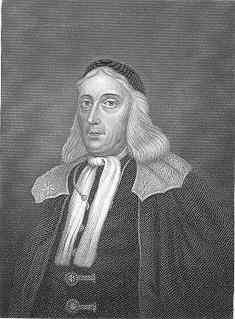
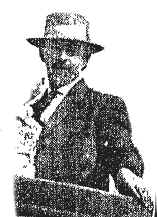
William Stoughton (1631-1701)
1636 (March 28)
Boundaries between Dorchester and Boston established.
1637
(November 20)
1638 (May 17)
Boundaries between Dorchester and Dedham established.
1657
(December 7)
1660-1663.
1659 (November 12)
A tract of 1,000 acres granted to Dorchester.
1662 (May 7)
Part of Dorchester set aside to establish the town of Milton.
1666
Regent
Kitchamakin conveyed all Indian land beyond Neponset Mill to the English
(October
8) - Cf. Stoughton Sentinel - Apr. 30, 1898, for Ponkapoag Indians
by Hon. Newton Talbot. Committee to lay out Indian plantation at
Ponkapoag: Major Humphrey Atherton, Lieut. Clap, Ensign Foster and
William Sumner.
1668
1684
(June 4)
Squamaug, Momentaug, For English: William Stoughton, Capt. John Capen, Lieut. Richard Hall, Ensign Samuel Clapp and Qms tr.
Thomas Swift.
1686
1691
and became part
of The Bay Colony.
1698
18th Century
1701
(April 14)
Puffer - Abigail born November
26, 1696, and Hester born May 29, 1699 and son of John Puffer
- John, born Oct. 3,
1698.
1701
(July 7)
1707
1707
The New Grant
established in 12 Divisions to 480 members called the Dorchester Proprietors;
hereafter called Dorchester South Precinct. It extended to a point near Attleboro within 176 rods of what is now the easterly
line of the State of Rhode Island. This southerly line was 191/2 mi. long on the
Old Colony line which was followed
N.E. by Braintree and Milton; crossed the crest of the Great Blue Hill to
Dedham; thence back to point of beginning. Territory now comprising
Stoughton, Canton, Sharon, Avon, Foxboro and parts of Dedham, Westwood, Walpole,
Norton, Wrentham and Brockton.
1709
The oldest section of the David Tilden house in present day Canton was built. The house is currently being preserved by the
efforts of The Friends of the Little Red House, Inc.
1713
Proprietors
incorporated as a district. Dorchester had nothing further to do here. In same
year all undivided land unsold henceforth known as The 25 Divisions. (see Mass.
Archives Collection- XLV: 418-425).
1716
First house built in present town of Stoughton.
Deacon Isaac Stearns (Monument on West
Street).
1716
The oldest gravestone from the original settlement of Stoughton is that of Gilburt Indicott [Gilbert Endicott] who died October 18, 1716, age 58 yrs. in the Canton Corner Cemetery, Canton, Mass. (originally the cemetery in the churchyard of the First Parish Church of Stoughton).
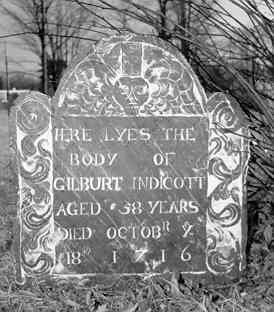
Inscription: HERE LYES THE / BODY OF / GILBURT INDICOTT / AGED 58 YEARS / DYED OCTOBR Ye / 18th 1716
1719
First school was held in the South Precinct of Dorchester.
1726
Dorchester South Precinct petitions for a township.
1726
Petition granted for a township.
The town would be named for William Stoughton.
1726
New town of Stoughton receives £ 50 for school money. Schools were held in private homes.
1727
(January 2)
First town meeting held in George Talbot's home.
1727
Second Minister called. Approved by town meeting Aug. 3.
1727
Town
surveyed for tax list. Found 7 saw mills, 2 grist mills, 4 iron works, 121
houses, 275 persons taxable, 763 neat cattle and horses. Occupations: Farmers,
carpenters, lumbermen, cobblers, weavers. No books or periodicals, except the
Bible, an almanac, Watts Hymns and a catechism.
1730
Joseph Porter, born June 10th in Bridgewater - moved to Stoughton 1777.
Advent of Porter family; developed 300 acres in center of Stoughton.
1730
Stoughton considers constructing its first school house. However due to scarce funds it was not see through.
1733
(April 25)
1734 (May 29)
Some
residents of Stoughton petitioned Walpole to attend their church.
1734
The
town voted to build a school house on the land near the Meeting house in
Ponkapoag.
Ens. Charles Wentworth, Lt. William Billings, and Preserved Lyon.
1735
1737
(December 10)
1738
(December 11)
1740
(July 2)
1741
A school was taught at Dea. Isaac Stearns house on West St.
1743
(November 9)
public
worship. William Shirley,
Governor. Religion dominant.
1744
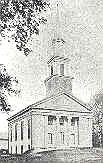
(June 18) -The First meeting house in present day Stoughton was raised in Stoughton Square.
1744
(August 10)
Third
Parish in Stoughton organized -
1744
First record of a female teacher in Stoughton. Elijah Capen was paid £ 16 for the services of his wife Damaris (Bird) Capen, and her sister.
1745
School kept in the house of Isaac Paul. This is thought to be the first school within the limits of present day Stoughton.
1751 (March 29)
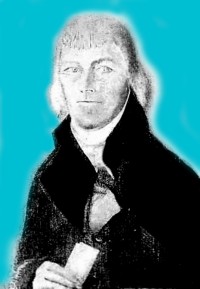
Supply Belcher (1751-1836) was born in Stoughton, and moved to Hallowell, Maine then to Farmington, Maine.
He served in the Revolutionary War from Stoughton. Supply was a musician and a composer. He was given the
title of "The Handel of Maine" for the music he composed while living in Farmington, Maine.
1752
(November 25)
1753
(March
30 & June 13) Parts annexed to Walpole.
1754
The 1754 Massachusetts Slave Census reported eight slaves living in Stoughton of the age of 16 and over.
1755
(October 25)
1756
1761
Town
of Stoughton fined £ 40 for failing to maintain a grammar school for the past
two years.
1762
1764
Smallpox breaks out with some families in Stoughton. Burial site located on Kinsley Street in present day Canton.
1765
(June 21)
1766
Elijah Dunbar began a moving grammar school. He taught school in seven different section of towns for periods of 4 to 14 weeks. Still the only
school house was at Ponkapoag.
1766
The Dry Pond School was established. Elijah Dunbar the teacher began a "moving grammar school". He would teach in
seven different sections of Stoughon for a periof of 4 to 14 weeks. At the time there were only one school house in Stoughton, that at Ponkapoag.
1768
Three new school houses erected during this time period.
1770
(November 20)
1771
Stoughton constructs a third school house in the First Precinct (now Canton).
1772
A petition to the General Court was sent from Stoughton. Stoughtonham and Dorchester were to sell the "School Farm" at Wrentham. The proceeds which Stoughton received from the sale was £ 108- 18s., from the £ 284 - 13s. - 4d. sale price.
1774
(August 16) - The Revolution
1775
(April 19)
Cf. Stoughton Sentinel. March 26 - April 29,1898 for Minute Men by Hon. Newton
Talbot.
1775
Stoughtonham and other districts are made a town by an act passed by the Commonwealth of Massachusetts.
1775
12 pieces of cannon, 18 and 24 pounders, they having took resolution to make the offer to Gen. Ward. To make merit of my service I sent them down and when they received them they sent them to Stoughton to be out of danger, even though they had formed the resolution as I before hinted of fortifying Bunkers' Hill
which
- was the lucky occasion of their defeat."
Gen.
Richard Gridley, First Engineer, U.S. Army.
Dr.
Benjamin Church, see Diary of Dorothy
Dudley, p. 38 (1876) and History of Massachusetts
- J. S. Barry (1857).
1775
1776
(May 22)
Independence "with lives and fortunes".
Powder mill
begins operation in Stoughton which
supplies most of powder during first 3 years of the war. Cannon also cast here.
1776
(August 18)
Rev. Samuel Dunbar reads a copy of the Declaration of Independence from the pulpit of the Old Meeting House (site located withing the Canton Corner Cemetery boundaries). A copy of the Declaration was entered into the town record book.
1778
(June 10)
1778
1779 (October 30)
Stoughton
Powder mill blew up. Mr. Pettengill is killed.
1780
(June 17)
1783
(February 25)
1784
1784 (December 23)
Adm. John Downes born. Fought Barbary pirates under Decatur.
Commander U. S. Navy 'Essex, " "Constitution, " "Wasp".
1785
Deborah (Sampson) Gannett (1760-1827), lived in Stoughton with her uncle, Zebulon Waters' family. She married
Benjamin Gannett, April 7, 1785 by Stoughton Town Clerk George Crosman to Benjamin Gannett “of Sharon”.
She served as "Robert Shurtleff" a female Soldier of the Revolution.
1786
Oldest Choral Society in the world founded at the home of Robert Capen (corner of Park and Seaver Streets).
Old Stoughton Musical Society (see History of same).
1788
Col. Jesse Pierce born November 7.
Famous teacher of noted men including: Capt. Robert B. Forbes, U. S. S. Jamestown, J. Malcolm Forbes and Fletcher Webster.
1789 (February 16)

 Part annexed to Sharon.
1790 - The first Federal Census of Stoughton's population: 1,994. This included the population of Stoughton which would become
Canton in 1797. Note the difference in the 1800 Census figures below. In 1790 there were 315 dwelling houses in Stoughton.
Click here for images and an index of the 1790 Stoughton Census.
1792 (February 22)
Part annexed to Sharon.
1793 (March. 12)
Part annexed to Foxborough.
1794
Eleven "Little Red School Houses" built, to be followed by others. One was located on the southeast corner of West & Plain
Streets. This would be the first of three Dry Pond School Houses.
1796
Azel (Asahel) Capen born Feb. 22; died Feb. 9, 1884.
Portrait painter, Primitive Americana.
1796 (June 21)
Gen. Richard Gridley died at Stoughton Manor. He was 1st Engineer of the U.S. Army. He is buried at Canton Corner Cemetery, Canton, Mass.
1797 (February 23)
The most northern region of Stoughton is incorporated as the town of Canton.
1798 (February 8)
Part annexed to Bridgewater.
1799 (December 10)
Rising Star Lodge F. & A.M. founded. Paul Revere was at the inaugural.
19th Century
1800 - Census Population of Stoughton: 1,020. (Search the 1800 Census of Stoughton)
Click here for images and an index of the 1800 Stoughton Census.
1800
First meeting of Rising Star Lodge at home of Lemuel Drake (The Austin House) Peter Adams, first master.
Charter Members: Peter Adams, Nathan Gill, Wm. Capen, Consider Southworth, Benjamin Capen, Abram Capen, Amos Capen,
Joseph Richards, David Wadsworth, John Atherton, Jr.
September 26, 1800
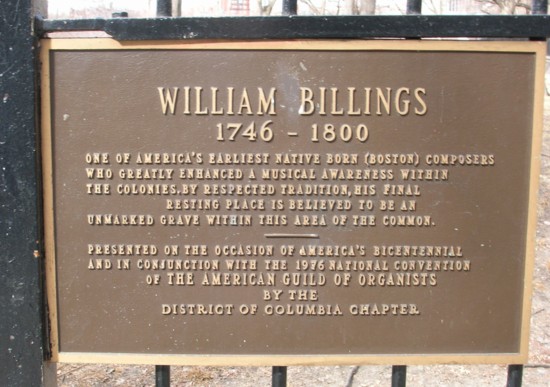
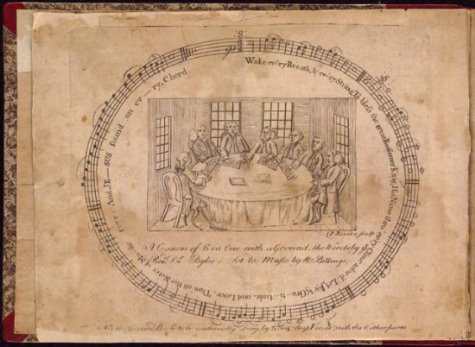
William Billings the American composer who taught in Stoughton dies in Boston. He was buried at Central Cemetery in Boston, Mass.
Revere engraving image provided with the permission of www.amaranthpublishing.com/billings.htm where you can listen to music by Billings.
1802
Martin Wales born February 22nd - Pioneer boot manufacturer.
1806 (June 23 and June 24)
Swan's Tavern - Washington Hotel
Franchise granted by General Court to Stoughton Turnpike Company (June 23), and to the Taunton and South Boston Turnpike Company the next day.
Turnpike franchise, Washington Hotel (aka) Swan's Tavern is built.
1808 (June 2)
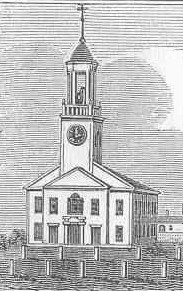
Church of Christ (on the Green) second building dedicated; became Universalist
in 1830.
Ministers: Rev. Thomas Jones, Rev. Jedediah Adams, Rev. Edward
Richmond, Rev. Ebenezer Gay.
1810 - Census Population of Stoughton: 1,134.
Click here for images and an index of the 1810 Stoughton Census.
1810 - Master Rising Star Lodge F. & A.M. Maj. Gen. Elijah Crane.
1812

 First industry in town a straw hat shop at West Shares.
1812
The Methodist Episcopal Church is founded in Stoughton.
1813

 Gay Cotton Manufacturing Co. established.

 Leonard & Samuel Hodges.
1814 (August 8)
Aaron Gay appointed the first Postmaster of Stoughton.
1815

  First boot shops - Manufactories and 34 home yard shops. Littlefield Brothers, John Linfield.
1817 (January 14)
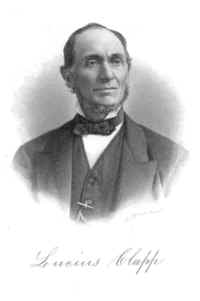
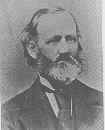
Lucius Clapp born in North Bridgewater, the son of Charles and Sarah (Manley) Clapp. Clapp would moved to Stoughton on West Street.
He would become one of Stoughton's most generous benefactors.
1818

  First post office in Stoughton at Wallace Capen Place, 769 Turnpike Street. Aaron Gay, first Postmaster.
1818

  First Methodist Meeting house built in West Stoughton.
1819
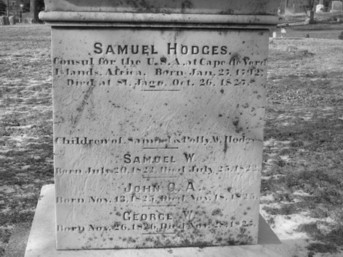
Samuel Hodges (1792-1827), Consul for the Unites States of American at Cape Verde Islands. See the obituary
for his widow Polly (Wales) Hodges.
1820 - Census Population of Stoughton: 1,313.
Click here for images and an index of the 1820 Stoughton Census.
1821

  Shoe factory established. Isaac Beals
1821
First Methodist Church erected in West Stoughton. Methodist Church erected.
1821 (August 22)

  Mount Zion Royal Arch Chapter consecrated, instituted December 12, 1820.
1822
Majority withdrew from Church of Christ and formed Congregational Church in loft over Swan's Store, then the home of Daniel Hayward.
Congregational Church formed. Rev. Calvin Clark.
1822 (September 16)
Stoughton uniformed Militia organized. Stoughton Grenadiers Association have their first parade.
1823

 First cotton cord ever made in Massachusetts by water power.

 Col. Consider Southworth.
1825 (June 1)

 Congregational (Orthodox) Church erected on Washington Street.
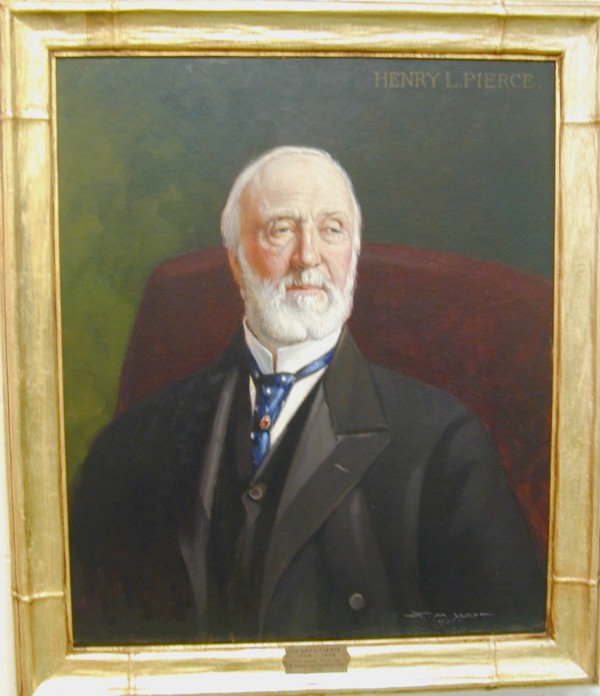
Henry Lillie Pierce
(1825-1896)
Painting by F. Mortimer Lamb
1825 (August 23)

  Hon. Henry Lillie Pierce born August 23, 1825 on Highland Street, Mayor of Boston, Legislator, Congressman 1843-1844 Congress.

  Henry L. Pierce   Donor of $25,000 to Library.
1826
First School Committee in Stoughton. A result of a Massachusetts State Law.
1827 (October 26)
Samuel Hodges from Stoughton, and the first Consul to Cape Verde, Africa died on the island of St. Jago.
1829 (b. May 29)   (Population of Stoughton 1,591)

  Trustee est. of Charles Sumner, Author   Life of Charles Sumner. Author    Treatise on Railroad Law.

  Edward L. Pierce.
1830 - Census Population of Stoughton: 1,591.
1835 (August 23)

  Methodist Church at Center erected.  Located on the site of present Methodist Church and parsonage on Pleasant St.
The church was dedicated September 16, 1835.
1836

  Sumner Academy   private school until 1868
1836

  Patent leather invented and developed for shoe trade.

  Nathan Tucker & Bros.
1836 (July 28)
North Stoughton Methodist Episcopal Church erected. Methodist Episcopal Rev. Thomas F. Norris.
1838

  First Parish formally became the Universalist Church.

  Universalist Church Rev. Massena B. Ballou
1838

  Dr. Elmer Hewitt Capen, born at Stoughton April 5,1838; died March 22,1905.

  President of Tufts College 1875 1905.
1839 (March)
The Stoughton Turnpike Corporation was dissolved by an act of the legislature.
1840 - Census Population of Stoughton: 2,412.
First Masses in Stoughton by visiting missionaries. Catholic Church
1843

Nathaniel Wales - Executive Council, State Senate. Assessor U.S. Internal Revenue, Sheriff.
Hon. Nathaniel Wales born Nov. 25,1819, came to Stoughton 1843.
1844
Rev. Henry Turner Eddy born in Stoughton June 9, 1844, President, Rose Polytechnic Institute, Terra Haute, Indiana.
1844

  Henry Clay Ide, born Sept. 18th, died June 3, 1921; married Mary M. Melcher;

  daughter married Bourke Cochran; daughter married Sir Shane Leslie. Ide

  became Chief Justice, Samoa and Gov. General of Philippine Islands.

  Henry C. Ide, Mary M. Melcher, Hon. Bourke Cochran, Sir Shane Leslie.
1845 (March 18)
First railroad in operation here. Stoughton Branch R.R. The first railroad car ran between Stoughton and Canton.
1845 (April 7)
The first railroad car ran between Stoughton and Boston.
1845 (May 5)
Independent Order of Odd Fellows inaugurated. I.O.O.F.
1845 (June 20)
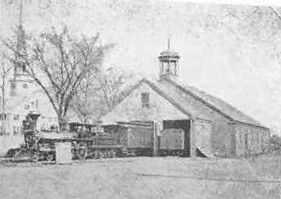
The first Stoughton Railroad Depot burned down.
1845 (October 13)
The second Stoughton Railroad Depot blew down before completion.
1846
A third Stoughton Depot is constructed from brick and Railroad Avenue is defined.
1847 (March 31)
Part of Canton annexed.
1847 (September 11)
Wales French born, founder of the Stoughton Public Library.
1848 (March 30)
The Third Baptist Meeting House is erected in East Stoughton (now Avon, Mass.)
1848

 First Mass of record in town in house on Capen Street, now on Brook Street.

 Father John Rodden, Quincy.
1848

 The Universalist Church in Stoughton Centre was altered.
1849

 First regular services of the Catholic Church held in Austin House.

 Rev. Terrence Fitzsimmons from South Boston.
1850 - Census Population of Stoughton: 3,494.
1850
Shoe last business established. Moses Linfield, Leonard Drake.
1852
Fire Department organized Captains: Henry Drake and James Capen.
1852 (January 28)
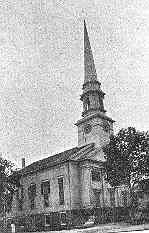
First Congregational Church dedicated at 819 Washington Street (site of the gas station next to the V.F.W. Hall in 2005) at a cost
of $12,000. The dimensions were 58 ft. x 75 ft., and would seat 500 hundred parishoners.
1853
  Edwin Arthur Jones, born at Stoughton January 27, 1853, died at Stoughton January 9, 1911; music composer and philanthropist.

  Town's greatest benefactor.
1853
  Dr. William Otis Faxon, born Oct. 24th, died Nov. 12,1942.

  Physician and political leader 60 years.
1855

  Birds eye view of Town government items:
	School Dept. 	$ 3,505.78

	Welfare Dept.  	   1,180.54

	Fire Dept.                      958.14

	Police Dept.	       None

	Town Officers	      574.38

	Incidentals	   6,972.92
Total: 13,191.76
Total Receipts: $ 15,956.26
1855 (May 16)
The first train ran from Stoughton to North Easton.
1855 (August 9)

  Dr. Horace Packard, born at West Bridgewater, died Jan. 24, 1936 in Stoughton.
  Pioneer surgeon appendectomy and anesthesia. Inventor of medical appliances.

  World famous surgeon. Professor of Surgery at B. U. for 22 years.
1857
Woolen Industry started in 2 mills by French and Ward. Col. Charles H. French, Henry Ward.
1857 (July 26)
The Evergreen Cemetery was officially consecrated.
1858
French & Ward Factory established. Located on Central St. across from West St. Manufacturer of Knit Goods and Baby Blankets.
They also produced eiderdown and krinkledown.
1858
Establishment of a High School in Stoughton. It would not assemble until 1865.
1859 (November 24)
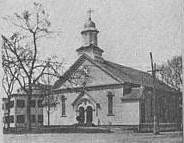
Immaculate Conception Church dedicated at the corner of Canton & School Streets. Bishop John B. Fitzpatrick, Father John Flatlev.
1860 - Census Population of Stoughton: 4,830.
1860 (November 10)
The Stoughton News started; soon stopped by Civil War. William H. Jewell, Ed.
1860

  Resume of boot and shoe business prior to Civil War which was fatal to most of the following firms: Nathaniel Morton, Martin Wales, L. & W. Belcher,

  Beals & Holmes, Hill and Drake, J. & W. Atherton, George R. Monk, James Littlefield & Co., Atherton Stetson & Co., Bradford Kinsley,
James Hill, S. Pettie & Son, Monk Reynolds, Samuel Savels, G. & S. Wales, J. W. Jones & Co., J. Swan & Co., J. & D. French, J. E. Drake,
  F. M. Littlefield, E. Tucker.

  Business grossed $1,300,000 yearly.

  Business casualties of Civil War.  21 firms, 1200 employees.
1861
State law enacted re: School Superintendent. Thomas Wilson, First Superintendent.
1861-1865 (Civil War)
Enlistments 592, Soldiers in service 540, 15 Commissioned Officers, Lost in Battle 78.
Cost to town in men and money of Civil War. Population 4830.
Soldiers' families $ 37,923.59
	Bounties		          	         62,249.50

	Other Military expenses	         20,988.87

	Total			     $121,161.96
1861
Stoughton Sentinel first issue.
First Newspaper, William H. Jewell, Ed.
1861

  Great American landscape painter, Francis Mortimer Lamb [F. Mortimer Lamb], born Middleboro May 5th.  His family came here in 1864.
1861
First Superintendent of Schools appointed.
1863
Present form of baseball cover invented by Stoughton man.
Ellis Drake, Inventor.
1864 (March 26)
Part annexed to Sharon.
1865
First Stoughton High School opened. F. F. Parker, Principal. Twenty four students enrolled.
1865
Electric Sharpener Co. Manufacturers of Knife sharpeners.
1866
The Methodist Church was built on the site of the earlier Methodist Church on Pleasant Street.
1866 to 1870

  Spiritualism here, the seed of Christian Science. Author lived in E. Stoughton 2 years, Stoughton 21/2 years.
Mrs. Mary Baker Eddy. [Editor Edward Meserve note (1976) : Historical evidence and the writings of Mary Baker Eddy show
that she emphatically disavowed Spiritualism. Her first student was an East Stoughton man who stated that while he had been a
Spiritualist before meeting Mrs. Eddy, he gave it up after studying with her.
1867 (March 4)
Town Meeting Article 16: "To see if the Town will required the School Committee to appoint a Superintendent of Schools".
1868 (December 10)
A. St. John Chambre Post 72, G.A.R. [Grand Army of the Republic] organized. Rev. A. St. John Chambre, Commander.
The charter for this post was given November 30, 1868.
1869 (October 14)
First reunion of the Stoughton Grenadiers Association held.
1870 - Census Population of Stoughton: 4,914.
1870
The Stoughton Town Offices relocate from Chemung Hall at the Universalist Church to Atwood's Stable at Railroad Ave. and Washington Sts.
1870
The Universalist Church in Stoughton Centre was remodeled and enlarged.
1870
Greeley, Colorado, established Union Colony.
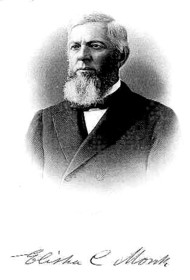
Hon. Elisha Capen Monk, Trustee of this new colony.
1872
Immaculate Conception Church became a parish.
Rev. Thomas Norris, First Pastor.
1872
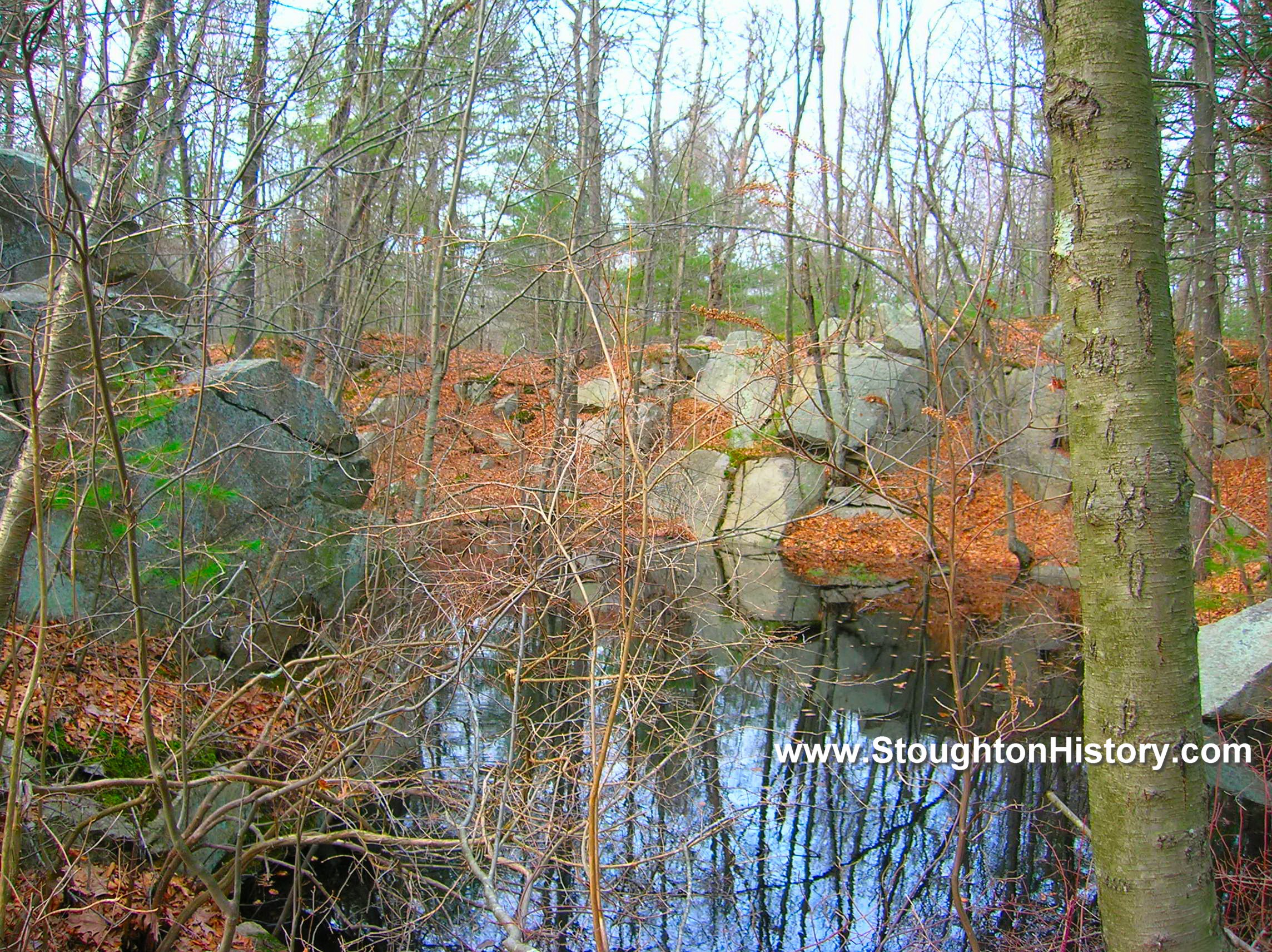
Myron Gilbert opens his granite quarry in Dry Pond off West Street.
1873
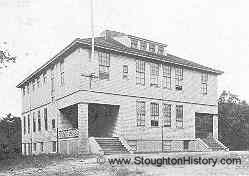
New Combination High School and Grammar School built on Walnut Street.
1874 (March 12)
First meeting of the Board of Trustees of the Stoughton Public Library.
1874 (March 17)
Public Library opened in Morton Square.
Wales French, Librarian.
1876
Town celebrated 150th Anniversary of founding.
Hon. Halsey J. Boardman, Orator of the day.
1876
Record established this year in harboring 2247 tramps.
Tramp problem after Civil War.
1876
Upham Bros. Shoe Co. established. Manufacturers of Women's shoes.
1877

 First commercial telephone message in the world sent by Stoughton boy for Stone and Downer, Boston. William Curtis, office boy afterward President of firm.
Cf. Telephone Topics and Stoughton Examiner May 15,1924.
1877
Foundation of Preparatory School for Smith College (with Mary A. Burnham).
Bessie Tilson Capen, born Stoughton December 29, 1838, Died February 11, 1920
1877
Stoughton Factory of the American Rubber Co. established - Mystic Rubber Co. Subsidiary of the U.S. Rubber Co. of New York. They produced
rubber clothing, hospital sheeting, sundries, top coats and gabardines. The rubber cloth was made at the mill in Stoughton, and the garments were
made up in workrooms in Boston originally.
1878
Second pastor Catholic parish. Rev. James M. Kiely.
1879
Founding of Port Rosaway Gun Club, first sporting organization in Stoughton.
1880 - Census Population of Stoughton: 4,875.
1880
The new High School and Grammar School constructed in 1873 is renamed in honor of the town's benefactor Lucius Clapp.
1880 (February 27)
Great fire at Stoughton Center, Half village burned out. Atwood's Stable (housing Stoughton Town Offices) and adjoining building were burned.
Area burned: west of Washington Street to Railroad tracks (buildings on Wyman St. spared), and north of Railroad Ave.
Walter R. Swan, Fire Chief.
1880 (March 18)
A special Town meeting is held to appoint a committee to build a Town Hall. Meeting was held at the corner of Seaver and Capen Sts. in a tent.
1880 (April 5)
The Annual Town Meeting votes to build a Town Hall on site of "Burnt District" for $40,000.
1880 (April 29)
Stoughton Town Hall construction is started on land owned previously by Robert Porter at Porter and Pearl Streets. The architect for the Town Hall
is S. J. F. Thayer of Boston. The building contractor was Joseph W. Coburn & Co. also of Boston.
1880 (November 15)
The roof for the Stoughton Town Hall is scheduled to be completed the winter of 1880-1881. Construction is delayed because of storms, cold
weather and failure for the selectmen to authroize installation of the boilers.
1880 (April 4)
The first town meeting is held in the unfurnished Town Hall. The dinner was served in an auditorium with bare brick walls.
1881 (November 22)
The Town Hall formally dedicated. Cost: $50,621.62. There was a cost overrun of $10.621.62 from original costs.
Present were Gov. John Davis Long; Hon. Edward L. Pierce, Orator
1883 (September)
St. Mary's School opened.
Sisters of St. Joseph, Mother Marie, Superior.
1883
Police Department organized chief designated. David Forsaith, Chief.
Editor's Note:
1883
Stoughton High School Association formed.
1885
Free textbooks in public schools.
1886
Stoughton Cooperative Bank Inc. established.
First Bank: George E. Belcher, President; Henry W. Britton, Treasurer.
1886
Murphy Coal Co. Established (now Murphy Coal & Oil Co.)
1886 (September 29)
An exhibition of electric lights was made in Stoughton Square.
1888
Mass. Catholic Order of Foresters established.
Stoughton Court No. 69, A. H. McDonald, Chief Ranger.
1888 (January 2)
The first train ran from Stoughton to Brockton.
1888 (January 31)
Electric lights were introduced in the town.
1888 (February 21)
Part established as Town of Avon.
Avon incorporated.
1888
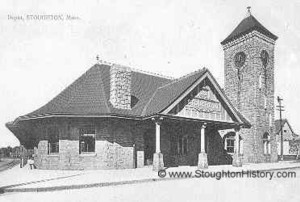
Present Stoughton Railroad Depot on Wyman Street is opened to the public.
The Stoughton Railroad Depot built from granite quarried in Stoughton.
1888 (December 19)
Doty's Tavern (originally in Stoughton) destroyed by fire.
1889
Stoughton Light, Heat and Power Co. supplies electricity and gas.
Electric and Gas Service.
1889
Brooklyn National League wins pennant in American Association Baseball League.
William Henry "Billy" McGunnigle, Manager of the Brooklyn Bridegrooms (later known as the Brooklyn Dodgers)
His family resided in East Stoughton] he was born in Boston January 1, 1855; died at Brockton, Massachusetts March 9, 1899.
1890 - Census Population of Stoughton: 4,852. Sadly this census was burned in a fire and only the veterans schedule for Stoughton remains.
1890
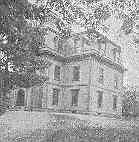
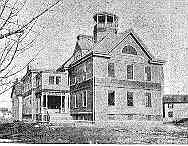
New Drake School construction is finished at the corner of Monk and Washington Street.
1890
Brooklyn Champions National League.
William Henry "Billy" McGunnigle, Manager of the Brooklyn Bridegrooms
1891
District Court of Southern Norfolk established in Stoughton.
Judge Oscar A. Marden.
1891 (January 1)
The new Drake School is opened for public inspection. The cost for construction: $15,815.55.
1891 (June 1)
The West Stoughton Railroad Depot opened to the public.
1892 (January 1)
Town Seal adopted. Edwin A. Jones, designer.
1892
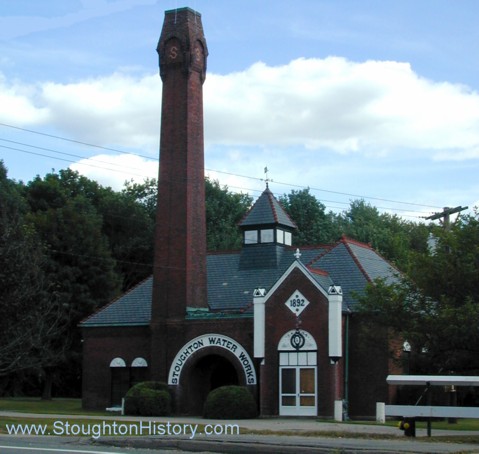
Water Dept. established.
Committee: Charles Tenney, Abram Paul, Henry Fitzpatrick.
1892
400th Anniversary of discovery of America by Columbus 3000 celebrate.
Maj. George W. Dutton, Rev. C. H. Puffer, Rev. D. P. Leavitt, Rev. E. P. F. Dearborn.
1892
Charles Stretton & Sons Co. moved to Stoughton from Canton.
1892
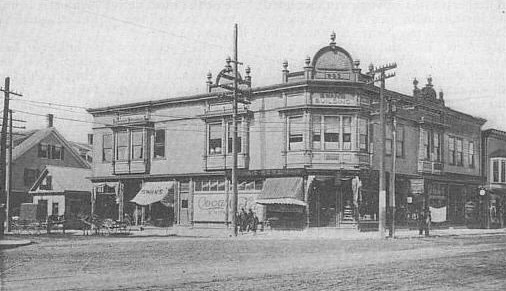
Swan Building built at the corner of Washington and Wyman Streets.
1893
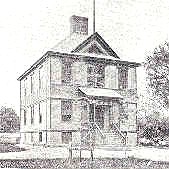
New school house erected at North Stoughton - the Capen School at the corner of Turnpike and Page Streets.
The cost of construction: $ 5921.34; Elisha S. Hawes contractor. Building committee: Henry H. Francis, Elisha S. Hawes, and Edwin A. Jones.
This school house had three grades down stairs (1st - 3rd) and three grades upstairs (4th - 6th).
1893
The Trinity Episcopal Church is founded in Stoughton. They met at the Masonic Hall on Wyman Street before their church was built.
1893
First meeting Ahavath Achim Society. Jewish worship established.
1893
Plymouth Rubber Co. founded.
Peter F. Marron of Stoughton, President; A. Sydeman of Boston, Treasurer; James Meade, Supt.
They offered rubberizing and spot proofing all grades of cloth from the rarest and most expensive silks, satins, velvets, to the cheapest
cloths used by the trade. Rubber for shoes and automobiles is also a large part of their business.
1893
Charles Stretton & Sons Co. Manufacturers of "American Beauty", Art silk, and knit underwear.
1893 (March 23)
Stoughton Grange organized. Henry F. Maxwell, Master.
1893 (August 11 to August 25)

  Old Stoughton Musical Society. Gave four concerts at Chicago World's Fair and two enroute at Montreal and Toronto.
Choral Society; Sanford W. Billings, Pres.; Leander Soule, Chor.
1893 (October 1)
Trinity Episcopal Church established. Rev. George Walker, Rector.
1894
Work began at York Pond (now Glen Echo Lake) to make a public park and playground.
1895
Congregation Talmud Torah first organized at home of Benjamin Lipsky.
Rabbi Max J. Zinner.
1895 (August 24)
Street railway to Brockton opened with celebration by 10,000.
Dr. William Otis Faxon, M.C.
1895 (September 7)
Stoughton Historical Society is founded.
Hon. Newton Talbot, Hon. Elisha Capen Monk.
1896
Knights of Columbus organized.
San Salvador Council. Peter Marron, Grand Knght.
1896

  Frederick A. Murphy graduated from Saint Mary's School. Became noted Chinese Missionary and linguist master of thirteen languages.
Ordained as Father Antoninus O.F.M., afterward Benedictine, Father Maurus 0. S. B.
1896
F. E. Benton & Co. established. Manufacturers of shoe last maker's supplies.
1896 (January 4)
The Hebrew Benevolent Society of Stoughton is chartered.
1896 (January 7)
The first Clapp School on Walnut Street was destroyed by fire.
1896 (April 20)
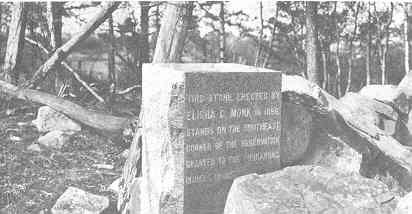
The Stoughton Historical Society places a granite marker (a gift of Hon. Elisha Capen Monk) to mark the location of the
southeastern corner of the Punkapoag Indian Plantation "P P 1657".
1896 (October 20)
The first fifty three subscribers were to receive telephone service.
1896 (November 30)
The second Clapp High School completed for a cost of $14, 521.01. The principal's salary was $112.00 per month.
Contractor: A. E. Woodward; C. L. Mitchell, architect; Building committee: E.M. Elmes, C.F. Walker, and Elliot A. Curtis.
1898
The Trinity Episcopal Church is built on Freeman Street.
1898

 Spanish American War and Philippine Insurrection. No records here known volunteers: 15.
Cf. Mass. Archives, Frank Chaplin, died in service April 6,1902.
1898
Stoughton Mills established. Manufacturers of recovered wool.
1898
Stoughton Rod and Gun Club organized.
1898 (May 30)
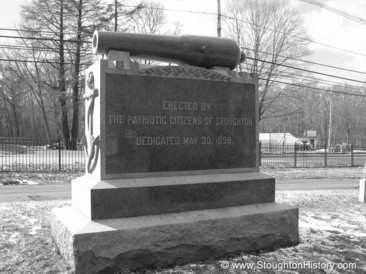
The Civil War Monument at the Grand Army of the Republic lot in the Evergreen Cemetery is dedicated.
Inscription: IN HONOR OF / THE MEN OF STOUGHTON / WHO SERVED IN THE WAR / WHICH PRESERVED THE UNION /
WHO LIE IN UNKNOWN GRAVES / 1861 1865 [Opposite side]: ERECTED BY / THE PATRIOTIC CITIZENS OF STOGHTON /
DEDICATED MAY 30, 1898.
1899
Electric railway cars ran between Stoughton and Canton.
1899
Packard Dressing Co. established. Manufacturers of shoe polishes.
1898
Stoughton Gun Club organized.
20th Century
1900 - Census Population of Stoughton: 5,442.
1900
Post Office established at North Stoughton. A. C. Ridgway, Post Master.
1900
  Principal manufactories after the Civil War to 1900: L. & W. Belcher Co., Tenney and May, J. & H. Fitzpatrick, Stoughton Rubber Co., Charles

  Stretton & Sons, Farrell & Marston, Belcher Last Co., French and Ward Mills, Reynolds Brothers, J. Swan & Co., A. & C. Southworth,
Upham Bros. Shoe Co., Stoughton Boot & Shoe Co., Daniel French Co., J. G. Phinney Counter Co.
1901
The Stoughton Veteran Firemen organize and purchase the "Alabama Coon" hand pumper.
1901 (November 17)
Last day of the horse drawn street cars to Randolph, Mass. These were replaced by electric street cars.
1903 (April 13)
Kimball High School opened. Named in honor of late Town Clerk Henry C. Kimball.
1904 (June 17)
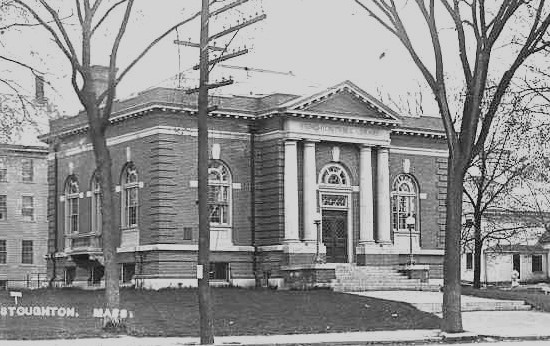
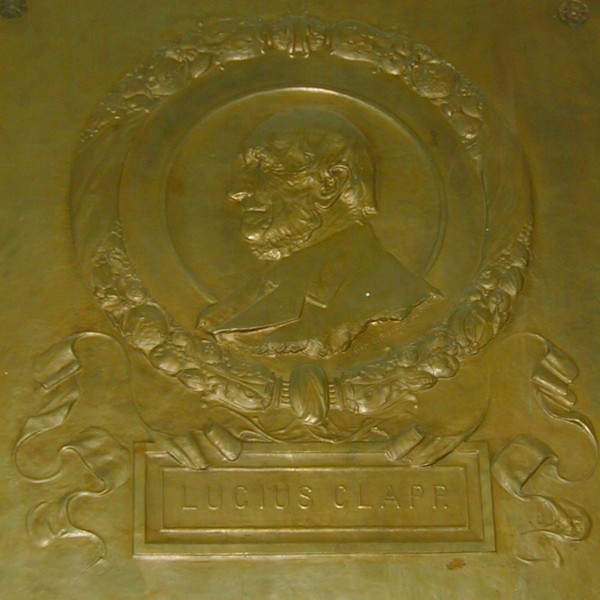
The Stoughton Public Library (Lucius Clapp Building) dedicated.
Lucius Clapp Plaque inside the Stoughton Historical Society
1905 - State Census Population of Stoughton: 5952.
1905
W. E. Maltby established the Maltby School of Shorthand in Swan's Building.
1905
The Evergreen Cemetery receiving tomb was constructed [Date above doorway].
1905
Stoughton Veteran Firemen win the New England championship at Manchester, New Hampshire with their"Alabama Coon" hand pumper.
1907
Stoughton wins the state baseball championship.
1908
Principal of Baghdad College 1943 1953 on Near East Mission: 21 years.
Joseph W. Connell born August 20th.
1908
J. W. Wood Elastic Web Co. established [Source: Facts about Stoughton - 1926]. Founder John W. Wood.
Manufacturers of elastic webs and cords.
1908
A teachers salary was $10.00 per week in Stoughton.
1910

  Great Industrial Exposition Feb. 22 25 in Town Hall. Show of products and processes.
Gov. Eben S. Draper and staff. Keiths Theatre supplied entertainment.
1910
Stoughton Post Office moves from Town Hall to Wyman Street (since 1881).
1910
Ryan Farms Inc. established. 40,000 egg capacity incubator. Produced 123,00 chickens in 1926.
1911 (July 15)
Stoughton Trust Company founded.
Guy A. Ham, Pres., Ira F. Burnham, Vice Pres., Fred D. Leonard, Treasurer.
1911
Stoughton News (newspaper) founded M. W. Hanley, Editor.
1911

   F. C. Phillips Screw Co. organized Fred C. Phillips.  Manufacturers of glass cutters, Keep-Kool Ventilators, and golf spikes.  \
They also offered a variety of welding, machine work and nickel plating [ca. 1926].
1911
Norfolk Lumber Co. established.
1911
Perfection Cooler Co. established. Manufacturer of water beverage coolers.
1912
Panther Panco Rubber Company organized. Frank Bernstein, Miah Marcus. Located where Shaw's Plaza is now on Washington St. (Rte. 138).
Manufacturers of Rubber heels and soles.
1912 (June 2)
Titanic disaster Memorial for George Quincy Clifford, among 1517 lost April 14, 15.
Judge Oscar A. Marden, James B. Connolly, Author of sea stories Eulogist M. F. Coughlin.
1913
United Lithuanian Societies incorporated.
President, Vincent Kaunas.
1913 (May 7)
Installation of street lights included new one at the corner of Pleasant and Pine Streets.
1914
Kenworthy Bros. Co. established. Manufacturers of Kendex Inner Soles, shoe findings, and felts for shoes.
1915 - State Census Population of Stoughton: 6316.
1915
The S.C.A.A. is organized and begins a series of different sports.
1915

  Pan American Exposition -   International Jury of Awards to Francis Mortimer Lamb, Silver Medal   2nd
Prize for Best Oil Painting.
1915
Meade Rubber Co. established. Manufacturers of rubberizers of all kinds of fabrics. Incorporated in 1922.
1916
Shawmut Woolen Mills established by Wyner Brothers on Canton St.
Manufacturers of Knit goods.
1916

  Fullers earth mine discovered. James Trowbridge. Site located at the end of King Street off West Street.
1916
Stoughton Rifle Club organized.
1916
School gardens imposed by war conditions. Very extensive and remarkable effort. Prizes in every category won. Stoughton
won a first prize and a third prize at Springfield in the North Atlantic competition.
1916

  Stoughton Trust Company build new bank in Stoughton Center (intersection of Rte. 138 and Rte. 27).
1916
Nasher Manufacturing Co. established. Manufacturer of men's clothing.
1917 (May 8)
Helen H. Lutted is born on Cedar Street in Stoughton to William and Ethel (Watts) Lutted. Helen who would later become
Helen H. Hansen, a well know Stoughton educator and citizen. Her 90th birthday was celebrated at the Town Hall by many
of her friends and family.
The Adams School which was located on Central Street was where Helen Hansen first taught as
a substitute teacher. This school house was located on the lot where the AMVETS headquarters in
Stoughton now stands.
1917 to 1919
First World War.
In service: 362; killed on foreign battlefields 18.
1917
Norfolk Raincoat Co. established. Manufacturer of Raincoats and waterproof clothing.
1917
Credits applied for conduct toward graduation eliminated. Society assumes pupils of High School age to be mature in that respect.
1918

  Congregations Ahavath Achim and Talmud Torah combined; Synagogue Ahavath Torah dedicated.
Rev. M. L. Graham.
1918
The Greb [Automotive Equipment Co.] established. [Source: Facts about Stoughton - 1926].
1918
Comfort Mattress Co. established. Manufacturers of mattresses and beddings.
1918
Dr. Charles Henry Gray (1865-1962) comes to Stoughton during to the Influenza "Flu" epidemic. He serves as a
doctor in Stoughton until the early 1960's. Dr. Gray lived on West Street, and at the corner of Plain & Morton Sts.
Dr. Gray owned the first steam automobile in the City of Cambridge, and built his own yacht the "Dorothy G."
(named for his daughter) which was launched in 1910. Dr. Gray was one of the oldest graduates from Harvard
Class of 1891.
1918-1919
Flu epidemic; Cases 947 Deaths 54.
1919
Webster's Candy Shop established [Source: Facts about Stoughton - 1926]. Located at 17 Pearl St., across from the Town Hall.
1919 (April 4)
Big homecoming for the first groupd of Stoughton's Yankee Division who returned home.
1919 (September 1)
 Welcome Home celebration end of World War 1. Gov. Calvin Coolidge, Maj. Gen. C. R. Edwards, Brig. Gen. John Sherburne, Maj. George W. Dutton,

 Capt. Robert P. Holdsworth, Royal Italian Vice Consul Sig. L. Milano Rossi, Pvt. Batista Maraglia, Holder of D. S. cross and Croix de Guerre.
1920 - Census Population of Stoughton: 6865.
1920 (April 15)
Sacco & Vanzetti case: International repercussions. Murder of Parminter and Beradelli made the bandits into heroes by intelligentsia in books, forums and
the movie "Winterset." First trial started 1921. Executions, week of July 10,1927. Nicola Sacco lived on Park Street, South Stoughton next to the Three-K
Shoe Factory. Judge Webster Thayer, Gov. Alvin T. Fuller, John W. McNarney of defense counsel born here January 22, 1907.
On Jury were: J. Frank McNamara and George W. Gerard (Stoughton Photographer).
1920
An Americanization School was held at the American Rubber Company for immigrants.
1920
Stoughton Catholic Athletic Association wins state football championship. Sport champion.
1920
Capitol Coat Co. established Manufacturers of gabardines and topcoats.
1921
Town manager act passed by State Legislature.
Burton L. Winslow, First Town Manager, 2117122.
1921

Stoughton Fish and Game Association is organized.  Russell H. Robinson, President.
1921
S.C.A.A. Football team wins the state championship.
1922
S.C.A.A. starts the training of a track team.
1922 (February 17)
Burton L. Winslow becomes First Town Manager of Stoughton.
1923
Brockton Crayon & Color Co. established [Source: Facts about Stoughton - 1926].
1923
Meade Rubber Sales Co. established. Manufacturers of Gos-mer-ett Raincoats. Incorporated in 1924.
1923
Stoughton Garment Manufacturing Co. established. Manufacturers of raincoats.
1923 (September 8)
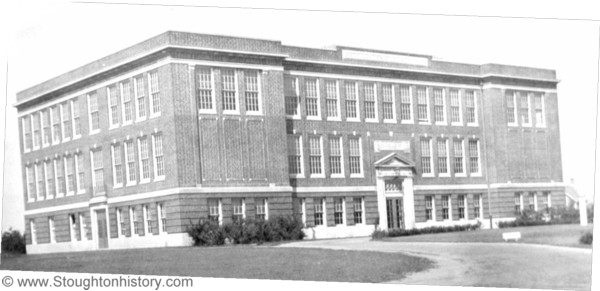
The original section of the Stoughton High School (the "A" building) is dedicated. It was built on 21 acres of land at a cost of $150,000.
William Curtis, Chairman of the Building Committee; Architect: Willard Hanson Builders.
1924 - Water Department Census Population of Stoughton:7802.
1924
George E. Belcher Co. Incorporated. Manufacturers of shoe lasts, last block fasteneers, shoe stretchers, fiber shoe forms.
They were the larges manufacturers of Men's Welt Lasts in the world.
1924 (April 28)
Bounds between Stoughton and Sharon established.
1924 (November 27)
Original Tolman School on Park Street burned
1925 - Census Population of Stoughton: 7857.
1925
Stoughton Lumber Co. established.
1925
McCormick & Rubel Rubber Co. Manufacturers of Rubber Clothing
1925
Mun Mohani established. Manufacturers of Perfumes, powders, facial creams and bath tablets.
1925 (May)
Stoughton Print Shop established.
1925 (October)
Walker-Thall, Inc. established. Manufacturer of men's shoes.
1925 (October)
Stoughton Printing Co. established.
1926
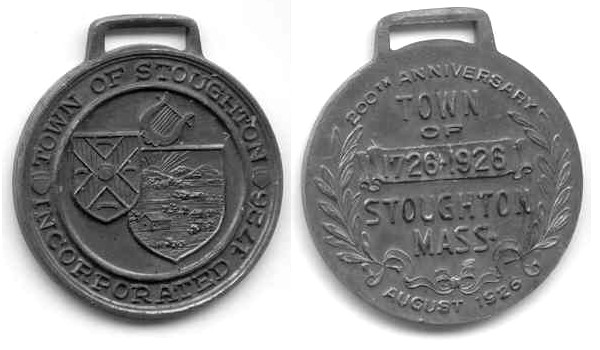
Two Hundredth Anniversary of the Town of Stoughton "The Pageant of Stoughton" 1726 1926.
Gov. Calvin Coolidge; Judge Oscar A. Marden; Suzanne C. Gruver, Author; James J. Hayden, Director.
1926
Stoughton Manufacturing Co. established. Manufacturers of jackets and dresses.
1926
E. R. Jackson Piano Hardware Co. established.
1926 (August)
The Stoughton Diner, Incorporated opens in Stoughton on Washington St.
1927
The first Tolman School on Park Street was burned down. Children attended classes at the Triple-K Shoe Factory on Park St.
1927 (June 13)
The Freeman Street fire station built. James Pye, Chief. Station was moved from lower level of Stoughton Town Hall.
1929
The Stoughton V.F.W. Post # 1645 is organized.
1930 - Census Population of Stoughton: 5442.
Stoughton Chronicle founded. Sold to present management April, 1931 G. Lester Gay, Editor & Publisher; Augustus H. Sullivan, Editor & Publisher.
1930
Edwin Arthur Jones Junior High School on Pierce St. erected at a cost of $118,000. Kindergarten classes were established in Stoughton this year.
1931
Stoughton's newest parochial building for St. Mary's School is erected on School Street.
1932
Kindergarten classes are closed due to the depression.
1933
The Dry Pond School (aka) Smith School, and the Atherton School are closed.
1933
Whispering Willows founded as summer school for African-American children (now Camp West Woods) at 808 West Street.
Incorporated in 1940. Miss Josephine Crawford, Supt.
1934 (August 11)
The Portuguese National Club established, and incorporated in 1938. In 2005 they met at the site of Nathaniel Morton's house (New England Furniture until the 1990's)in Morton Square, while their new headquarters
are being constructed on Railroad Avenue. On February 18, 2007 they opened a brand new headquarters on Wyman Street and Railroad Avenue.
John Mendes, John Martin, Frank H. Simonds.
1934
Sons of Italy Lodge founded.
Volta Lodge; Antonio Scioscia, Grand Venerable; Joseph DeVito, Sr. Treas.
1934
Stoughton Trust Co. merged with Norfolk County Trust Co.
Dennis A. Buckley, Manager. John J. Rogers, Director.
1935 - Census Population of Stoughton: 8478.
1936 - Stoughton Trojans Athletic Club organized.
1938 (January 3)
The Portuguese National Club was incorporated in Stoughton.
1939 - Stoughton Fish and Game Association purchased the Charles W. Welch Memorial Preserve 220 acres. A portion of which is land give
to the Boy Scouts, makes a public park out of grounds.
1939 (February 4)
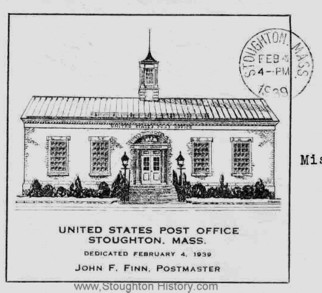
Stoughton dedicates a new post office on Park Street. A first day postal cover was issued in celebration.
1939 to 1945
World War 11. In service 1150; Officers commissioned 75; killed 28.
Hear Adm. J. Donald Kelsey; Com. John Pillsbury in U.S.S. Missouri; Lt. Col. C. B. Murphy.
1940 - Census Population of Stoughton: 8595.
1940 - Roseaway Rifle and Pistol Team organized.
1940 - Stoughton Trojans Football team win the district football championship.
1940
The Stoughton Rotary inaugurated May 11. Almon M. Frederick, President.
1941 - Water Department Census Population of Stoughton: 8975.
1942 (March 9)
The First Congregational Church at 819 Washington Street burned down that morning.
1945 (October 24)
Randolph Savings Bank Branch. William S. Hudson, Elisa D. Carrara.
1948 (Population of Stoughton 9063)

  Beginning of building boom: Pinecrest Acres
Ralph H. Mann Sr., Robert P. Swan, The Kelly Corporation.
200 houses built value: $1,500,000.
1948 (January 12)
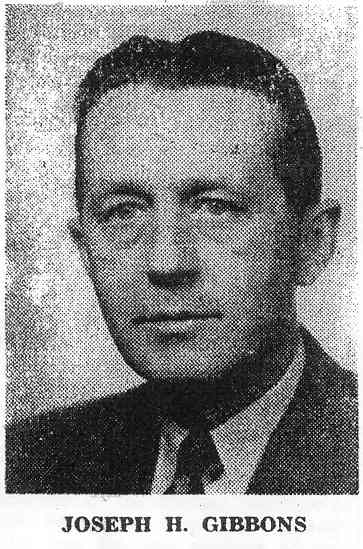
Joseph H. Gibbons (1911-1986) begins employment of Superintendent of Schools for Stoughton.
1949
School System before expansion of population: Schools 8, Plant value et $ 434,000,
pupils 1559. teachers 56, supervisors 3, supt . 1, staff 1, bud $228,109.04.
Supt. of Schools, Joseph H. Gibbons; Principal High School, Howard R. Randall. The School Guidance Program was initiated by
Aaron Fink, Guidance Director.
1950

  Murder by Communists in Tibet of Douglas MacKiernan Vice Consul U.S.A. at Urumchi, Capital of Sinkiang,

  Graduate Stoughton High School. Story by Frank Bessac, companion who escaped Cf. Life, Nov. 30, 1950;
News Sentinel and Enterprise, Nov. 16, 1950.
1950

  Korean Conflict and Far East to date. In service 390; Dead 3. War in the Orient.
1950 (January 18)
Brink's Robbery occurs. Two Stoughton men are later reveled as part of the gang involved. The armored car is
located cut up in the old Stoughton dump on West Street (site of the Soccer Fields and Dog Pound).
1950 (January 18)
Construction contract to build the West Elementary School. Cost: $601,755., assisted by a state grant of
$ 271,955.87 Architect: Collens, Willis, and Beckonert. Builder: Tornabene Bros.
1951 (February 15)
The enlargement of the Stoughton High School began by Architect: Collens, Willis and Beckonert; Builder: Tocci Bros.
Cost: $1,211,500., assisted by a State grant of $576,368.37.
1951 (September 30)
West Elementary School construction completed.
1951-1952
The Great Hall Auditorium in Stoughton Town Hall was taken down to offer office space.
1952 (September 8)
Construction finished on the new addition to the High School.
1953 (April 14)
New England Tel. and Tel. building for automatic dial system dedicated. William M. Gustin, General Manager.; John Sugden, District Manager.
1953 (November 5)
Construction contracted for an addition to the new West School. Cost: 186,000., aided by a State construction grant of $91,967.70.
Architect: Collens, Willis, and Beckonert; Builders: L. C. Blake Co.
1954 (August 16)
West Elementary School addition completed.
1954
Edwin Arthur Jones Junior High School addition. Cost: $508,835.52, aided by a State Construction Grant of $231,092.20.
Architect: Collens, Willis, and Beckonert; Builders: Leonard Rugo, Inc.
1954
Stoughton Portuguese American Civic League formed.
Frank H. Simonds, Pres.; Joseph Lessa, Vice Pres.; Caroline Tarchara, Treas.
1954
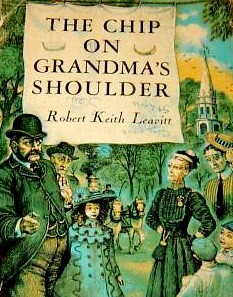
Chronicle about Stoughton was published by J. B. Lippincott Co. "The Chip on Grandma's Shoulder" by Robert Keith Leavitt.
This is the story of his grandmother Susan C. (Blazo) Keith who lived in Stoughton during the early 1900's. See the letter written by her in 1858
when she lived with her husband in Stoughton briefly.
1954
Present School System complete rehabilitation: schools 7, plant value $3,600,000. pupils 2452, teachers 90, adm. assts.
11, supt. 1, staff 2, Budget $ 580,241.21 asked; Budget $572,232.78 granted.
Supt. of Schools, Joseph H. Gibbons: Principal High School, Aaron Fink.
1954

  Saint Mary's School: pupils 379, teachers 9, plant value $160,000.

  Rev. W. W. Gunn, Pastor; Sister M. Agnellus Superior.
1954
Principal products manufactured here: rubber goods, elastic webbing, screws, spikes and machine products, clothing, textiles, sporting goods,
wooden boxes, viscometers, and shoe lasts. Factory products.
1954

  J. W. Wood Elastic Web Co., Belcher Last Co., Joseph Corcoran Shoe Co., Shawmut Woolen Mills Co., Brookfield Engineering Co.,
Tigron Latex and Chemical Corp., American Biltrite Co., Kennedy Mnfg. Co., Bond rite Co., Cable Mfg. Co. Lurie Sportswear Co.,
Packard Dressing Co., Crimmins Elastic Webbing Co., Buschenfeldt Orthopedic Appliances, Corcoran Inc., Rock Mfg. Co.
Principal mills and factories.
Present or Recent (as written by John E. Flynn in 1954).
The Lord shall write in the books of the people: "These were born there." Psalms 86 6.
Some notables of present day [1954] (not all natives [of Stoughton]).
Commissioner of Conservation - Prof. Robert P. Holdsworth (University of Mass.)
Comm. Mass. Turnpike Authority - William F. Callahan.
Builder of Eastman Rockefeller Rochester Hospital, later Mass. General Hospitals Geneneral Manager -. Dr. Nathaniel W. Faxon.
Botanist U. S. Govt. Dept, of Agriculture - Dr. Sidney Blake, P.H.D.
President Nat. Association Roadbuilder - Charles Upham, C. E.
Novelist and "Mystery" writer - Frank L. Packard.
Famous surgeon Pioneer Methods - Dr. Horace Packard.
Public relations writer, Author of "The Chip on Grandma's Shoulder'' - Robert Keith Leavitt
Trappist Monk, known as Brother M. Eutropius, O.C.S.O., Our Lady of Gethsemani Abbey, Ky. - James S. Fox born Jan. 16,1925.
President of World Chemical Cartel American Division, Farben Fabriken of Elberfeld - John O'Dea
Golden Rule Foundation, 1955 Massachusetts Mother of the Year; New Hampshire Mother of the Year - Mrs. C. Noble Lapworth, Stoughton;
Mrs. Chester W. Doe, Northwood, (former Florence MacCombie of Stoughton).
Treasurer of the Boston & Maine R. R. Thorold S. Curtis.
1955 (Population of Stoughton 13,792)

  Birds eye view of town budget:

	School Dept.        $ 572,232.78

	Welfare                  172,489.00

	Fire                         67,865.84

	Police                      62,214.00

	Library 	               17,732.78

	All Other Services 734,134.81
Total: $1,626,669.21
Dwellings 3,236 Tax Rate: $68.00; Cf. 1855 and 1900 budgets for growth of population and services.
1955
New addition to the Stoughton High School added. Cost: $299, 999.77, aided by a State grant of $148,971,87.
Architect: Collens, Willis, and Beckonert. Builder: L.C. Blake Co.
1955 (March 15)
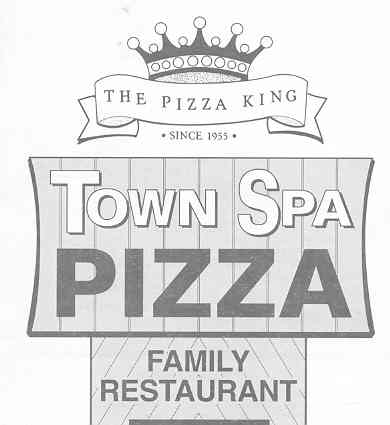
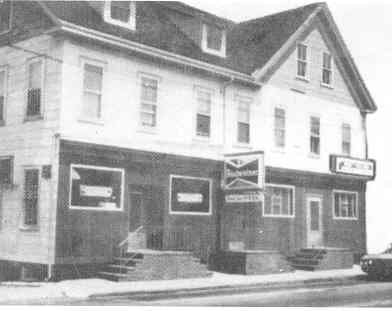
Stoughton's world famous Town Spa Pizza is opens at the corner of Porter and Rose street. (Special thanks to Dick Phillips for use of these images).
1955 (July-August)
The Drake School on Washington and Monk Streets is torn down.
1957
Stoughton Auto Body, Inc. first opened.
1957 (April 11)
Further boundaries between Stoughton and Sharon established.
1957 (November 4)
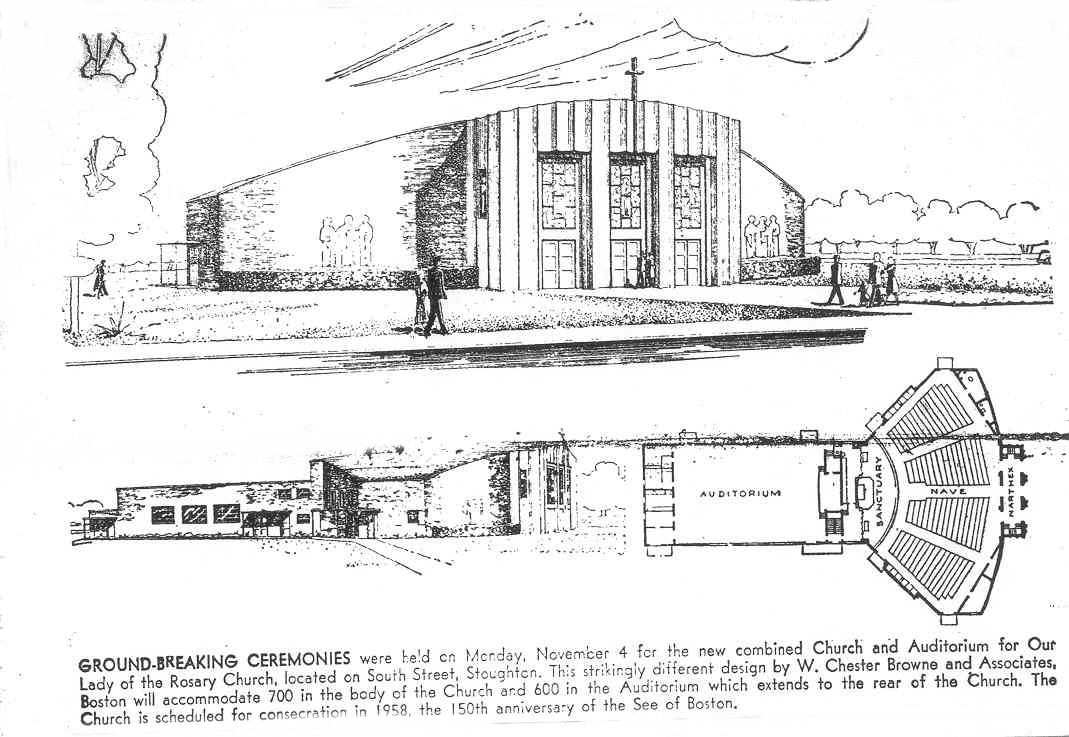
Our Lady of the Rosary on 1278 Park Street is Dedicated. Now the Jubilee Christian Church.
1957 (December 7)
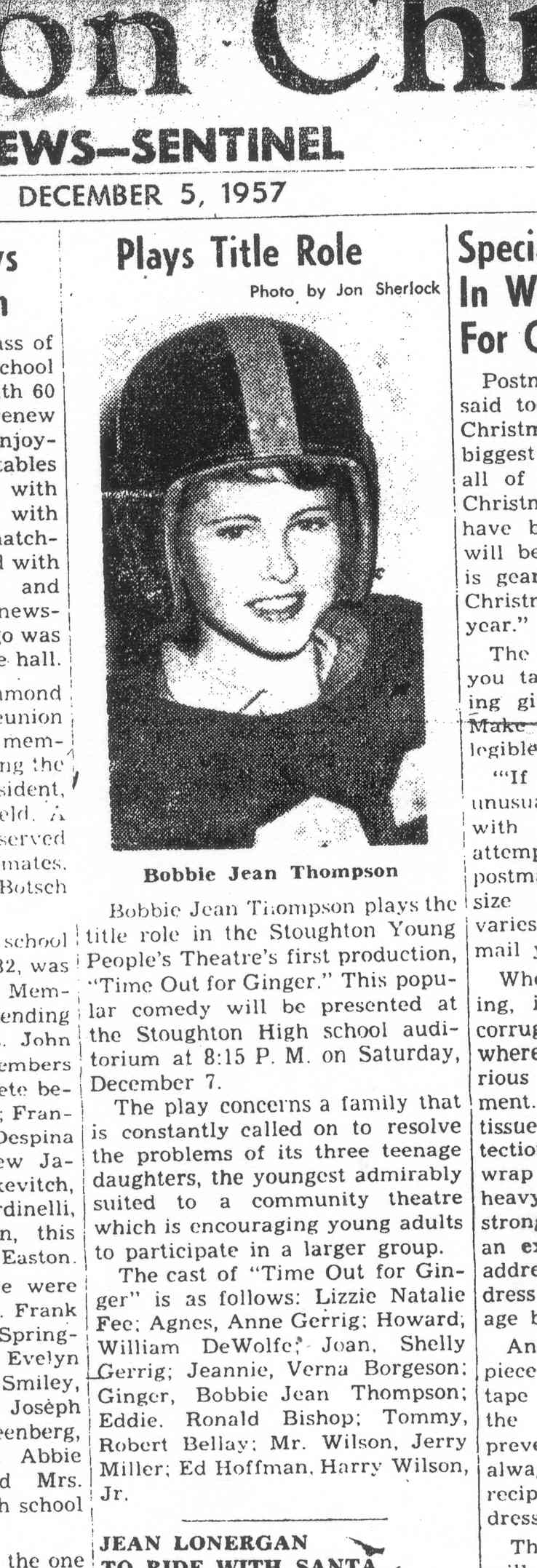
The Young People's Theatre in Stoughton was organized by Dorothy Woodward and Joseph J. Celi. This group would
be renamed the Stoughton Little Theatre in 1960. A list of all their performances from 1957 to present.
The first production is "Time out for Ginger" which opened on December 7, 1957.
1958
The South Elementary School built. Cost: from a twenty year bond: $675,000. Architect: The Architects Collaborative; Builder: C.A. Batson Co.
1958
The Diamond Jubilee for St. Mary's School is celebrated.
1959
Stoughton Police Station moves from the Town Hall to Rose Street structure.
1963 (August 28)
Stoughton is represented amongst the 200,000 who marched for Civil Rights in Washington.
1963 (November 25)
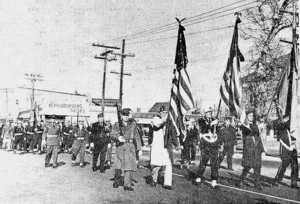
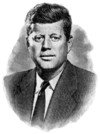
Stoughton honors the memory of the late President John F. Kennedy (1917-1963) with a memorial service. The memorial
combined units from Stoughton Post 89 American Legion and the Michael Romanuk Post 1645 Veterans of Foreign Wars.
1966
Jeanne Frances McNamara, former Town Clerk 1921-1951 dies at the age of 79 years.
1969
The North Elementary School opened. Later named for long time principal Joseph H. Dawe.
1969 (May 18)
Dedication of the new Stoughton Public Library on Park Street.
1969 (September 6)
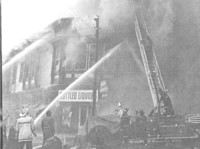
The Swan Building at the corner of Washington and Wyman Sts. (built in 1892) was destroyed by fire.
1971 (March 15)
Stoughton Town Charter adopted.
1974 (January 21)
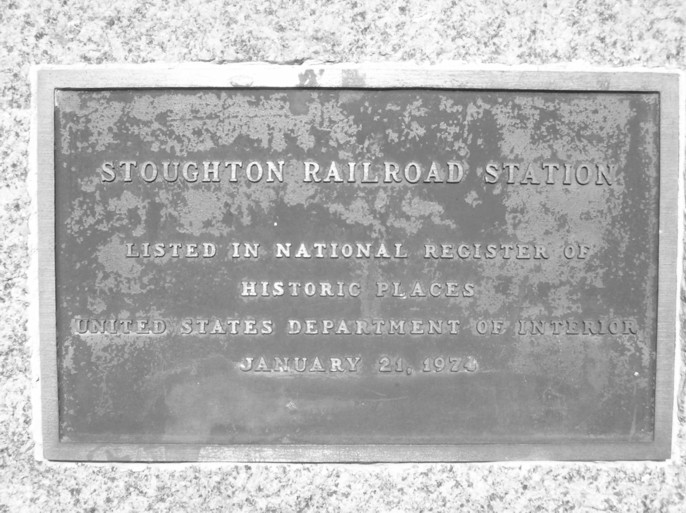
The Stoughton Railroad Station was listed on the National Register of Historic Places.
1975 (May)
The old headquarters of Dentch Ford (formerly James Lehan Ford) the oldest Ford Dealership in the United States is torn down
on Porter Street. Site of the Present Stoughton Post Office building.
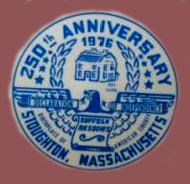
1976 (April 3)
Stoughton's 250th Anniversary Ball.
1976 (May 23)
Stoughton's 250th Anniversary Parade.
1976 (June 11-13)
Stoughton Country Fair held behind the Stoughton High School on Pearl Street.
1976 (June 30)
Margaret E. Fitzpatrick retires as Town Clerk after twenty-five years.
1976 (December 22)
Stoughton's 250th Birthday party held at the Lucius Clapp Building (Stoughton Historical Society).
1979 (July)
Leo R. Green Sr., Park "Dedicated to the memory of all Deceased Veterans of the Town of Stoughton" Located at the Bird Street
Conservation Area.
1984
Clapp School on Walnut Street torn down.
1986 (September 9)
The present Town Spa is opened at the corner of Washington and Plain Sts.
1988
Boyle Carpet Cleaning of Stoughton starts in business.
1989 (October 29)
The Chemung Hill School is renamed for former Principal Helen H. Hansen.
1990
Bates Remodeling of Stoughton starts in business.
1998 (November)
Mark Snyder runs his first newspaper column in a Stoughton newspaper
21st Century
2001
The town of Stoughton celebrates the 275th anniversary with a variety of events.
2001 (February 11)
Margaret E. Fitzpatrick, Stoughton Town Clerk from 1951-1976 dies at the age of 91.
2001
Stoughton Fire Department Station Number 2 is dedicated on Central Street.
2003 (March 2)
The Stoughton Town Hall Foyer is named in honor of former Town Clerk Jeanne Fleming for thirty five years of service to the town.
2005 (June 25)
The Red Sox World Series Trophy made a historic second visit to Stoughton at the Felos Memorial Art Center (formerly Twin-Kee Raincoat Factory).
Artist Elaine Felos Ostrander hosted this event. Ostrander is one of the most recognized 21st century artists from Stoughton.
2005 (August 14)
Lightning strikes the roof of the old Odd Fellows Building in Stoughton square. Structure is saved by the efforts of the Stoughton Fire Dept.
2005 (September 14)
The Board of Directors of the Stoughton Historical Society vote to purchase (via donations raised for that purpose) the original
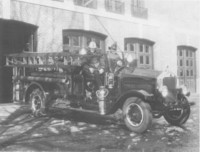
1928 Stoughton Engine 2 (Maxim Fire Engine). This fire truck was used in Stoughton from 1928-1956.
2005 (November 6)
The Stoughton Historical Society and the town of Stoughton Officially welcome back 1928 Stoughton Engine 2 (Maxim Fire Engine).
2005 (November 9)
The long awaited Grand Opening of the IKEA Store in Stoughton, Massachusetts.
2006 (February 15)
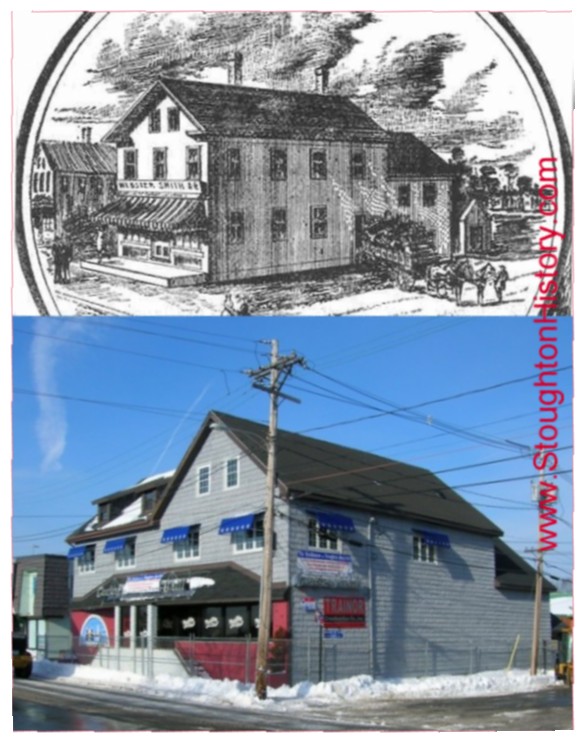
The original location of the Stoughton Town Spa at 10 Porter Street (corner of Rose St.) was razed to make room for
"The Residences at Stoughton Junction". This structure was built in 1882 for Webster Smith on land formerly owned by
Robert Porter (1798-1876). The Webster Smith furniture and undertaking business was at this location, later merging with
Lowe & Powers Funeral Home (now Sheehan Funeral Home). The location would later serve as the home to the Stoughton
Town Spa, Choo-Choo Charlie's, and lastly Centerfields Restaurant.
(Special thanks to Hank Herbowy for the photo from February 15, 2006.)
2006 (June 16)
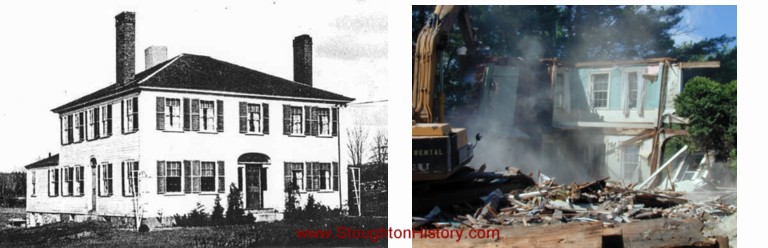
Benjamin Marshall (1744-1829) homestead built ca. 1810 was raized. This lot will be the site of the new church for the St. James Lutheran Church (currently at 214 York Street, Canton, Mass.)
2006 (August 2)
Many Stoughton residents are affected by uprooted trees, and loss of power after a severe storm hits the Plain and West Street
neighborhoods. This storm is labeled by the National Weather Service a Derecho. It is defined as a "violent and destructive
wind storm".
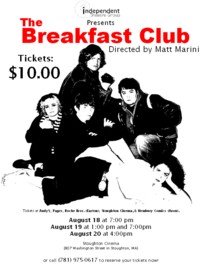
2006 (August 18)
The first performance of the Independent Theatre Group from Stoughton is held at the Stoughton Cinema Pub. Their first performance directed by
Matt Marini was "The Breakfast Club". [Editor's note: They did an outstanding job with their first production!].
2006 (August 19)
The Bradley Lessa Playground was dedicated on West Street.
2006 (September 21)
Stoughton Centre Traffic Lights become operational
2007 (February 18)
The Portuguese National Club opened a new headquarters on Wyman Street and Railroad, and the new club was inaugurated May 5, 2007.
2007 (May 8)
Helen H. Hansen Day in Stoughton to honor the 90th birthday of our life long Stoughton resident, and namesake of the former Chemung Hill School
now the Helen H. Hansen School. In dedication of Helen's Birthday I ran the following article in The Stoughton Journal highlighting news from
Stoughton the week of her birth in 1917.
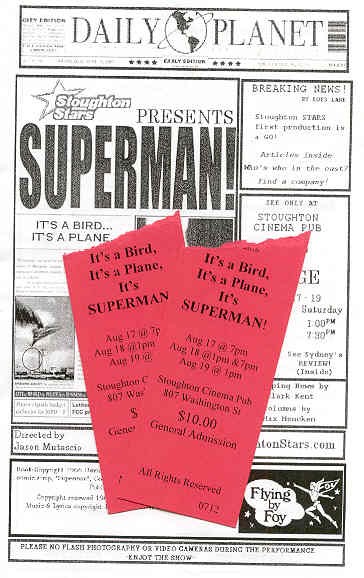
2007 (August 17-19)
The first performance of the STARS, Inc. of Stoughton held at the Stoughton Cinema Pub. Their first performance directed by
Jason Mutascio was "Superman". [Editor's note: Incredible show !].
Back to the main page of www.StoughtonHistory.com